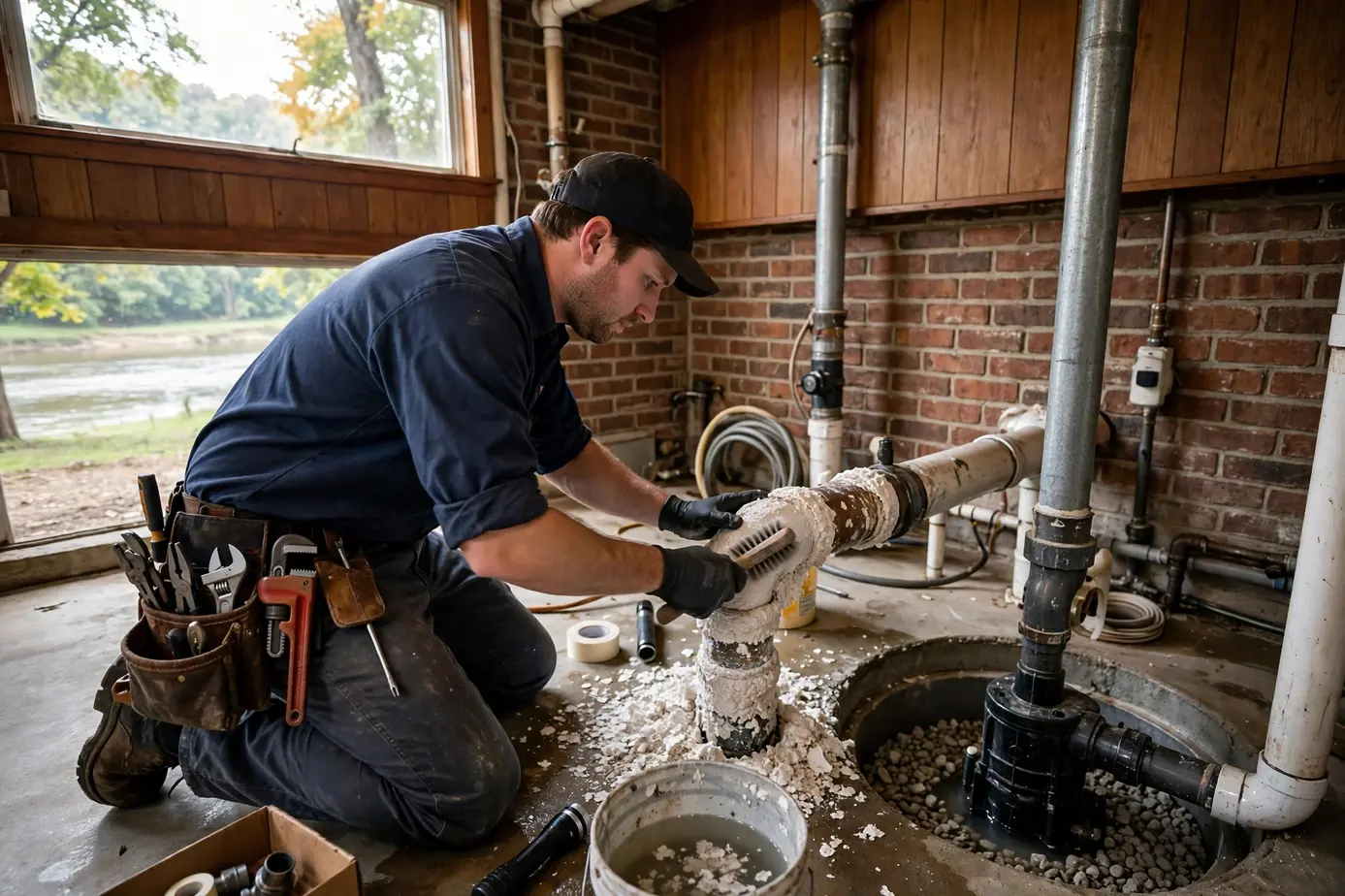
Direct answer: Short answer: Madison plumbing ages from the inside out and the outside in. Hard water scales heaters, cartridges and lines from within, while Cumberland River ground and storm water test sump pumps, drains and lower level plumbing from without. Different forces, same answer: planned maintenance beats emergency calls.
Hard water, the slow inside force
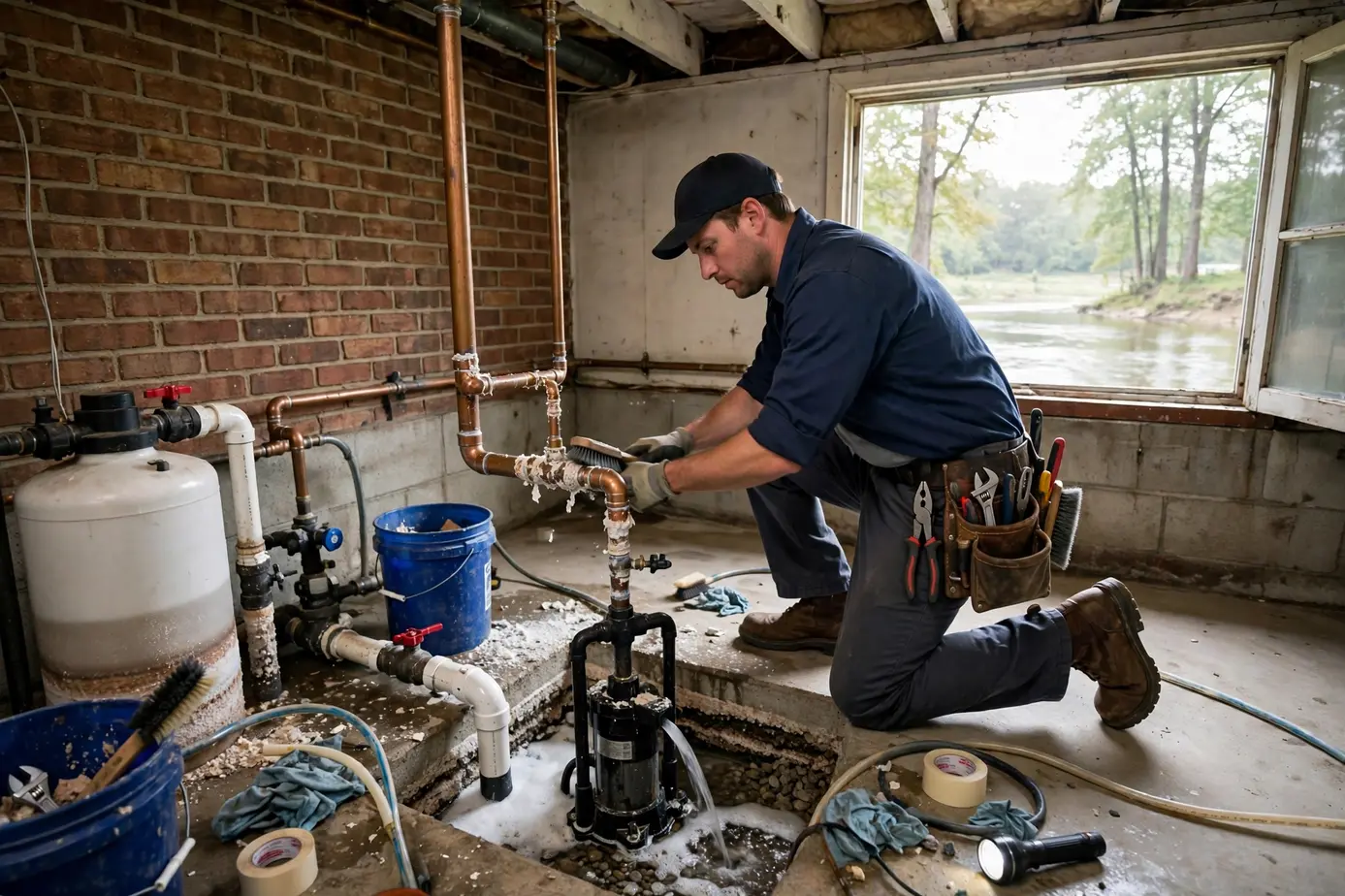
Every heated gallon in a Madison home leaves a little mineral behind. It settles in tank bottoms in Madison Park, coats tankless exchangers in Edenwold, crusts aerators in Rivergate and stiffens shower cartridges in Shepherd Hills. None of it is dramatic in a month, and all of it is expensive in a decade. Yearly heater care, anode checks and softening where the test justifies it are the countermeasures, in that order.
River water, the fast outside force
Neelys Bend lives inside a loop of the Cumberland River, and Peeler Park ground shows how high water can sit. When storms load the river and the soil together, sump pits fill for days, floor drains become the lowest point in a stressed system, and a pump that has not run since last spring is asked to run all night. Test pumps before storm season, confirm the discharge exit is clear, and know whether a backup makes sense for your lower level.
Putting the two together in one home plan
A Madison home plan that works: spring, test the sump pump and walk the yard line for wet spots. Fall, drain the water heater and disconnect hoses before freezes. Every few years, hardness test, anode check and a camera look at any sewer line that has needed clearing twice. That rhythm, kept loosely, prevents most of the emergency calls we run in 37115.
Quick checklist
- Yearly water heater sediment care
- Sump pump tested before storm season
- Hardness tested before buying treatment
- Sewer camera after second repeat clearing
Related reading and services
Helpful outside reading: Bradford White water heaters and Plumbing topic overview.