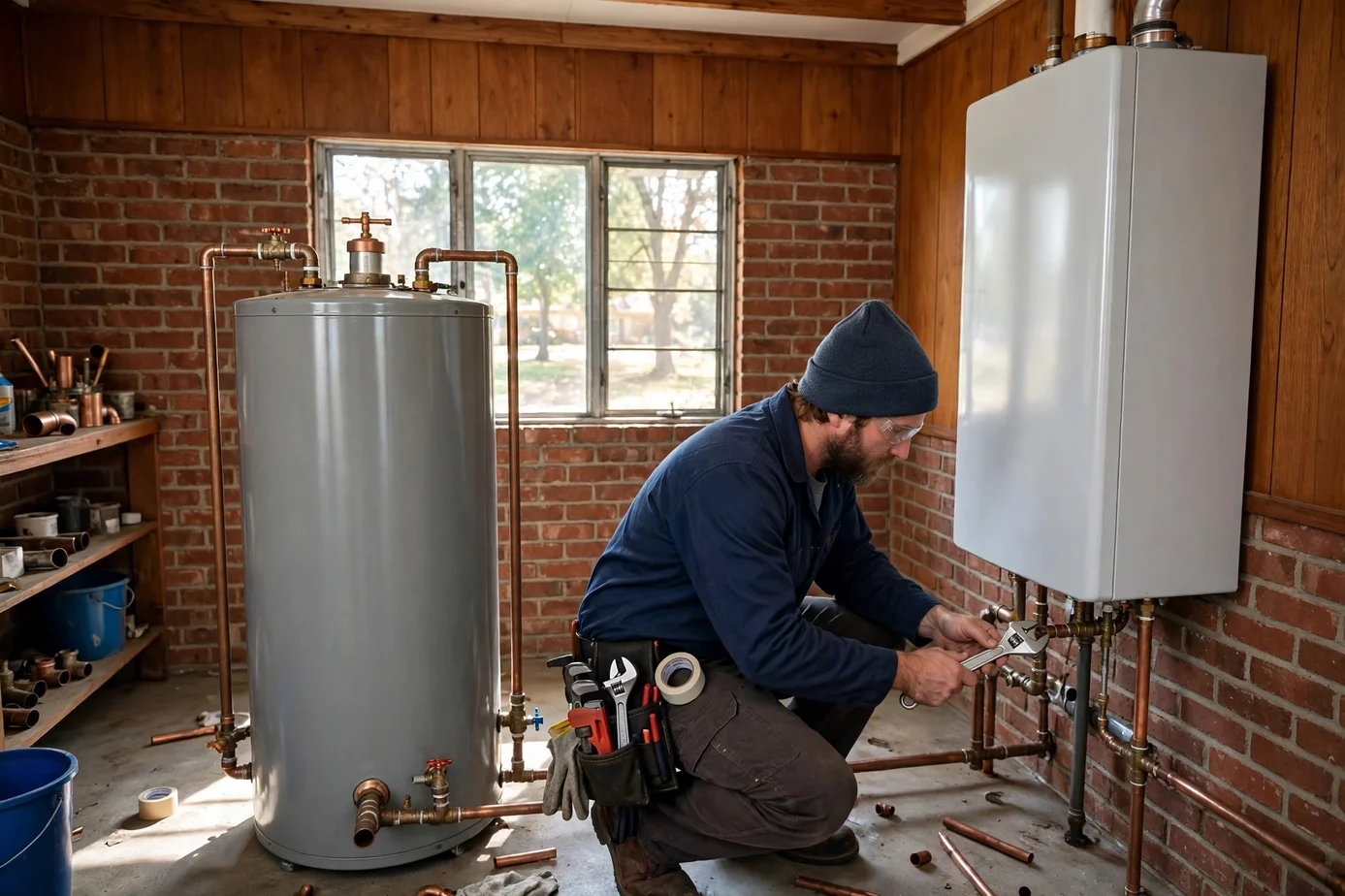
Direct answer: Short answer: a tank is simpler, cheaper to fit and forgiving of skipped maintenance, while tankless saves standby energy and space but costs more to install and demands yearly descaling in Madison hard water. Your household pattern, not the brochure, should decide.
How each fits a Madison household
A tank suits steady family use, keeps hot water ready through a power flicker of stored heat, and replaces like for like in the garages and closets Madison homes already have. Tankless suits long showers in sequence, tight spaces in Edenwold remodels, and homes where the heater closet is wanted back. Its limit is flow at once, not total gallons: three showers and a dishwasher together can stretch a small unit in January.
The hard water deciding factor
Madison water changes this comparison more than any national article admits. A tank tolerates sediment for years before it complains out loud. A tankless unit counts descaling as rent: skip two years and codes, cold spots and a shortened exchanger life follow. If your household will genuinely keep a yearly service rhythm, tankless shines. If maintenance honestly will not happen, a tank is the safer buy and we will say so.
Costs in the right frame
Compare installed cost, not shelf cost: tankless can need gas line, venting and electrical changes in an older Madison home, which narrows the energy savings payback. Then compare running cost and lifespan with maintenance done. Our cost guide frames repair and replacement ranges, and a sizing visit using your winter inlet temperatures gives the real output numbers for your house.
Quick checklist
- Tank: lower fit cost, forgiving, standby losses
- Tankless: space saving, descaling required yearly
- Winter inlet temperature decides real output
- Compare installed cost, not shelf cost
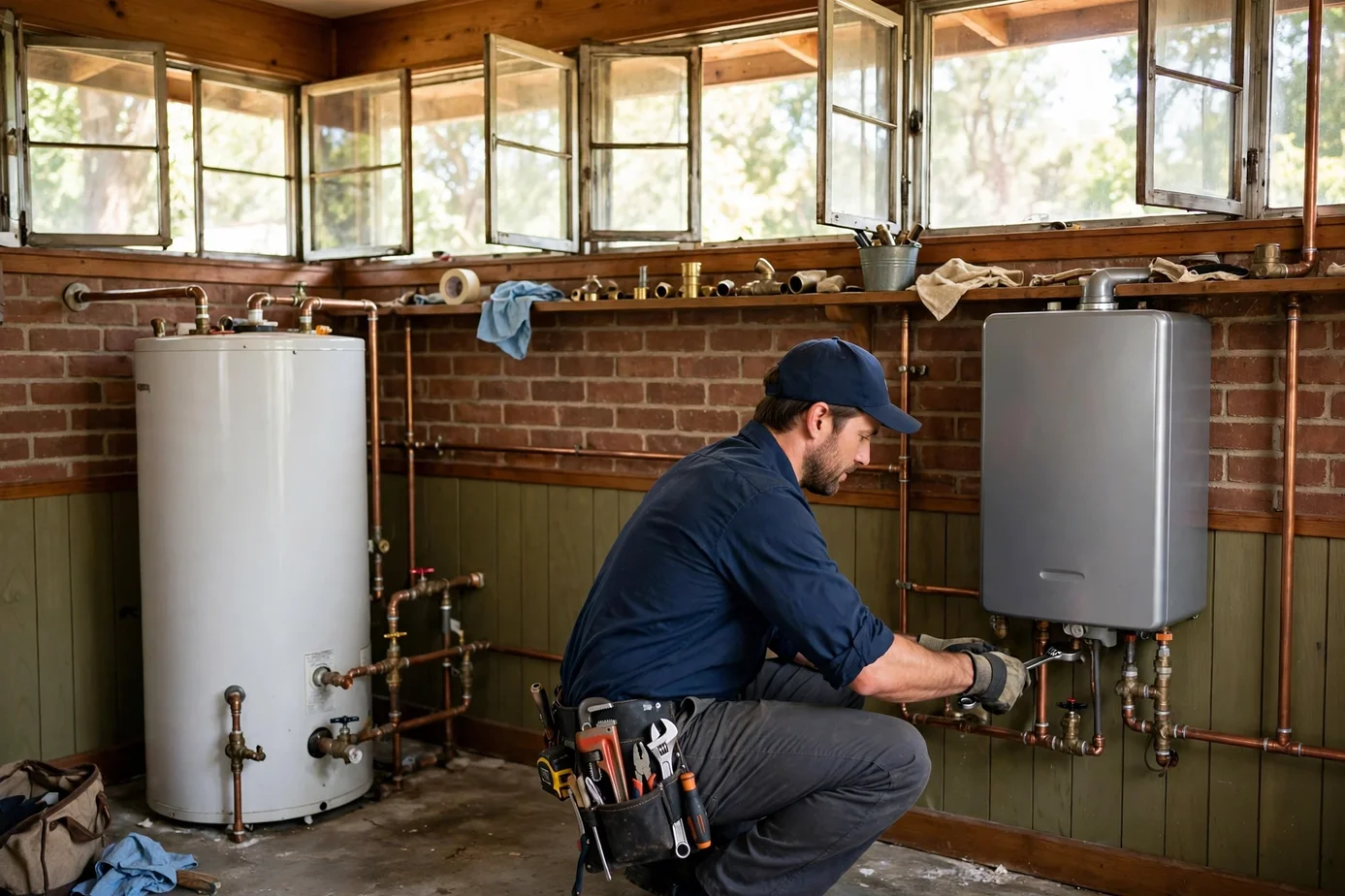
Related reading and services
Helpful outside reading: American Standard plumbing products and PHCC plumbing heating cooling contractors.