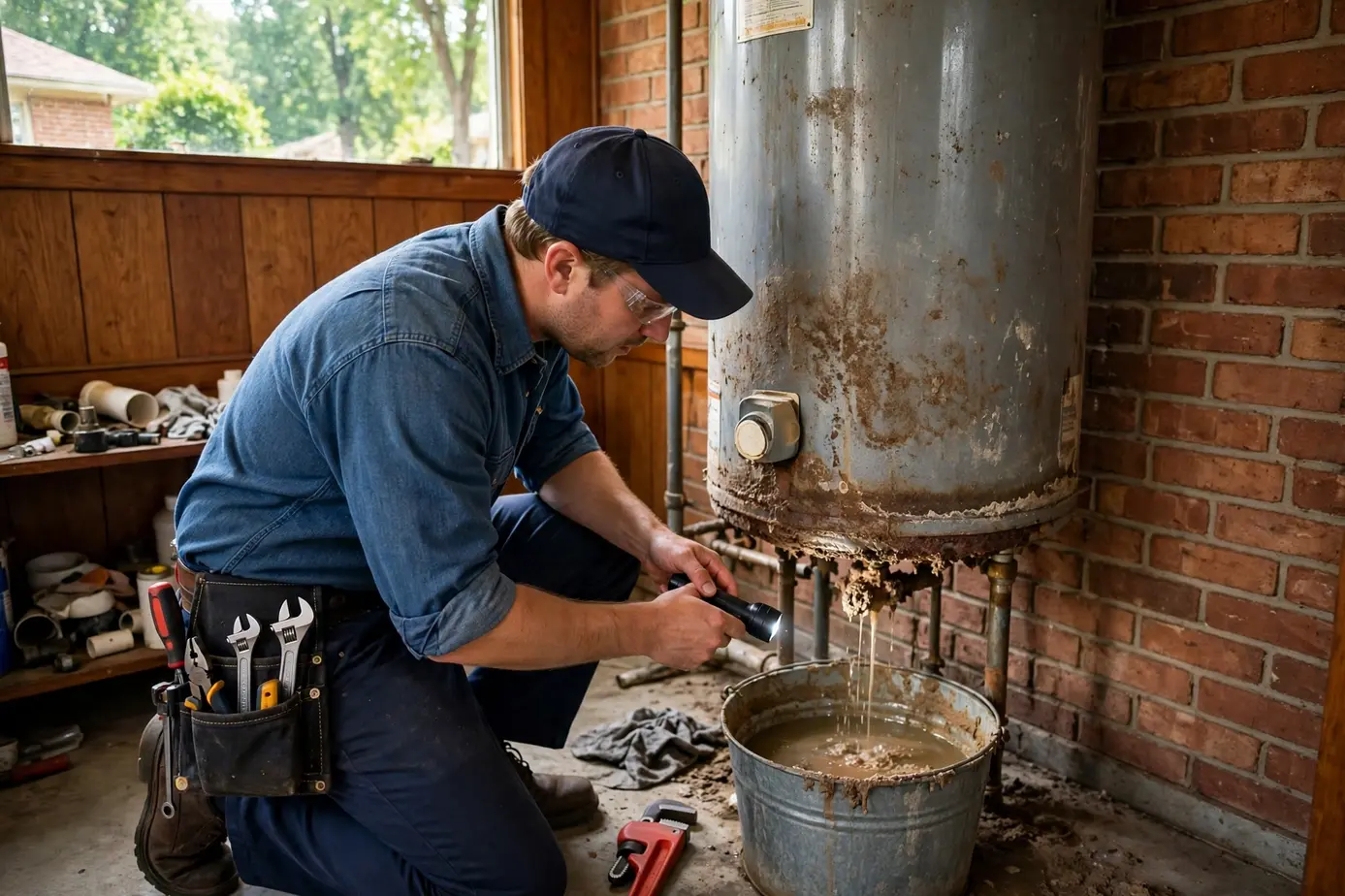
Direct answer: Short answer: rumbling and popping from a tank heater usually mean sediment. Water trapped under a layer of hardened sediment at the bottom of the tank boils and pops through it. In Madison that sediment is hard water mineral, and it builds faster here than owners expect.
What each sound tends to mean
Rumbling and popping point to sediment, as above. A high pitched whine can be a valve or a partly closed stop. Ticking is often just pipe expansion as hot water moves, and is the one sound on this list that is usually harmless. Banging, called water hammer, is pressure slamming in the lines and deserves a look at arrestors and pressure, not at the tank.
Flushing: what it can and cannot do
Draining and flushing a tank yearly stirs out loose sediment before it hardens, and it is the maintenance step Madison heaters miss most. A tank flushed for the first time after eight silent years may drain slowly through a clogged valve, and the hardened layer may stay. Flushing is prevention and mild treatment, not a resurrection, and we will tell you honestly which one your tank is a candidate for.
When noise means the end is near
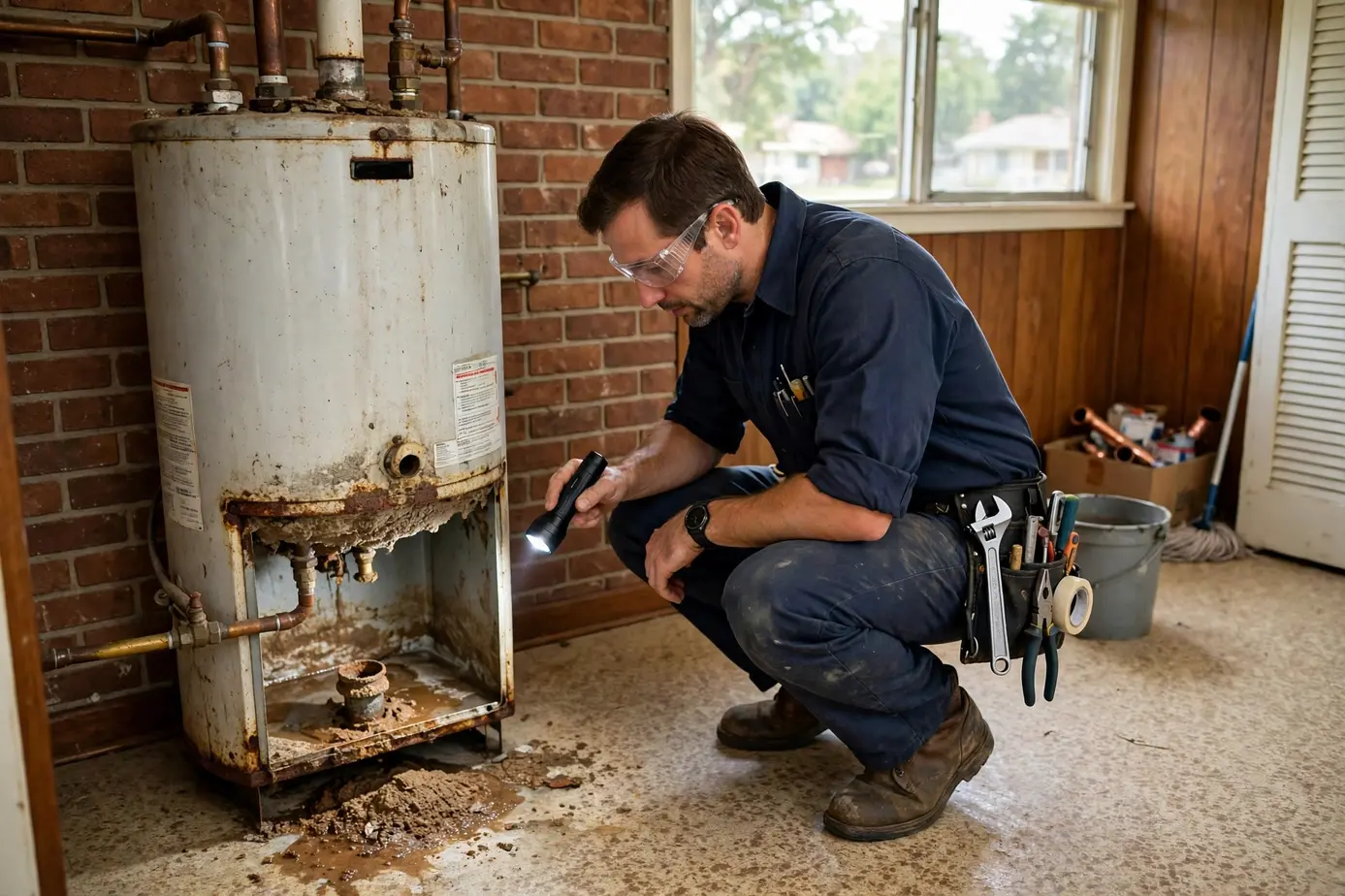
Noise plus rusty water, noise plus a tank that cannot keep up, or any noise with water at the base of the tank changes the conversation from maintenance to replacement timing. An anode rod spent years ago lets the tank itself become the sediment story. If your heater is noisy, find its rating plate age before you spend on it, that number frames every decision.
Quick checklist
- Sediment flushing attempted yearly
- Rating plate age checked before repairs
- Rusty water treated as a warning sign
- Ticking pipes usually expansion, usually harmless
Related reading and services
Helpful outside reading: EPA WaterSense water saving guidance and American Standard plumbing products.